Gilbert M. Román
September/October 2026
Download This Article (.pdf)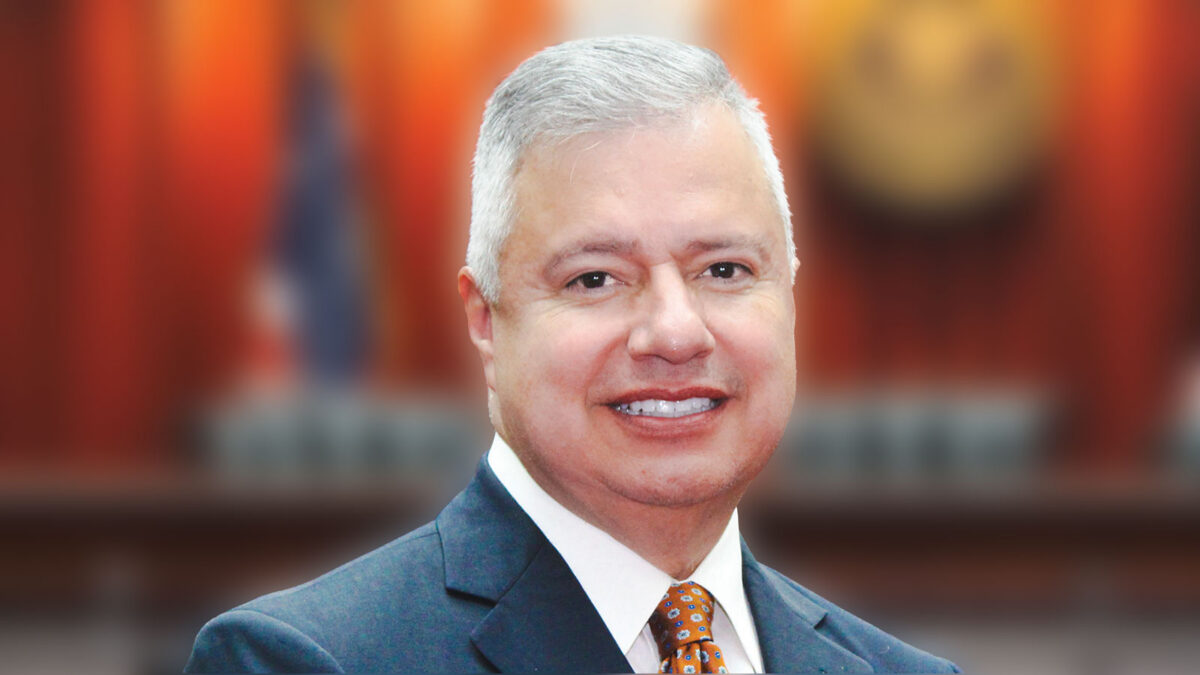
The Colorado Bar Association and the Colorado Judicial Institute’s Diversity on the Bench Coalition are proud to present this series highlighting judges who serve communities across Colorado. Through these profiles, readers can learn more about the people behind the bench—their backgrounds, career paths, and the experiences that shaped their judicial service.
This month, the coalition is pleased to feature the Honorable Gilbert M. Román, who retired from the Colorado Court of Appeals on July 31, 2026, after serving as chief judge since December 31, 2021. He was first appointed to the court in 2005. We are grateful to Judge Román for sharing his story and hope it inspires students, future lawyers, and others interested in public service. If you enjoyed this profile, we encourage you to share it with colleagues, students, and members of your community.
If you’re interested in meeting or speaking with Judge Román, please contact coalition co-chairs Judge Cynthia D. Mares (ret.) or Judge Mariana Vielma at diversity@cobar.org.
Roots and Beginnings
Judge Román’s story begins with movement, change, and resilience. From the time he was 3 years old until he graduated from high school, his family moved seven times. His father worked for the federal government and was transferred or promoted throughout Judge Román’s childhood, which meant that he often had to adjust to new schools, new communities, and new environments.
He spent his final three years of high school in Lakewood and graduated from Alameda High School. Looking back, Judge Román recalls that being the “new kid” so many times was difficult, especially because he had a stutter. His speech impediment followed him well into adulthood. Although many of the stuttering incidents faded, it still creates anxiety for him from time to time. Those early experiences helped shape his understanding of perseverance and the importance of pushing through difficult moments.
Motivation to Attend Law School
Two experiences from Judge Román’s youth inspired him to attend law school. The first happened when he was sitting at the kitchen table in the mid-1970s listening to his father talk about mandatory school busing. His father worked for the Office of Civil Rights at the former Department of Health, Education, and Welfare, and one story in particular stayed with him. Judge Román remembers hearing that truckloads of brand-new desks and school supplies were being delivered to Manual High School before many predominantly white students were bused there. The situation opened his eyes to inequities in society and sparked his early interest in the law.
The second experience happened around the same time, when he participated in a mock trial for Parents’ Night during junior high school. He was the defense lawyer in a case where one of the issues was whether his client had a gun in his locker. During rehearsal, he felt confident and performed well. However, at the actual event, the teacher allowed the prosecution to introduce new evidence that had not been disclosed before—that the gun was allegedly seen by a witness who would testify to that effect. Judge Román remembered feeling outraged by the unfairness of being surprised with new evidence. Although the jury ultimately hung, he was still enraged on the drive home and told his parents that he wanted to become a lawyer.
Overcoming Barriers
One of the greatest challenges Judge Román faced on his path to law school was his speech impediment. He never knew when the words would not come out, which made public speaking feel terrifying. He often worried that his stutter would become a significant obstacle in law school and beyond.
Rather than avoiding his fear, he tried to confront it directly. In high school, he participated in a play because he loved acting, even though speaking in front of others was difficult. He also took a public speaking class in college, but both experiences were challenging. During one acting performance, he stammered over a critical line, and during his first college speech, he struggled through almost every transition. He has described that moment as a low point, and he seriously questioned whether he had what it took to become a lawyer.
Still, Judge Román powered through that doubt. He went on to attend the University of Michigan Law School, a national law school, and continued forward despite the fear and uncertainty he had experienced earlier in life. By the time he finished law school and began practicing law, most of the stuttering incidents had faded, though not completely. His path shows that with resilience, obstacles do not have to define a person’s future.
Building Expertise
Before joining the bench, Judge Román built a strong and successful legal career. He made partner at both a large law firm, Rothgerber, Johnson & Lyons LLP, now Womble Bond Dickinson, and at a smaller firm. He also served as in-house labor and employment counsel.
Throughout his career, he developed a reputation as an excellent legal writer. He served as the de facto “Motions and Appeals” Department of the smaller law firm, gaining significant experience in legal research, writing, and appellate work. Those skills prepared him well for the Colorado Court of Appeals, where careful writing and legal analysis are critical.
Judge Román has also emphasized the value of developing expertise in a specialized field. For him, that field was employment law. Although judges often become generalists once they take the bench, handling both civil and criminal matters, his specialized experience helped strengthen his legal judgment and professional foundation.
Community Involvement and Leadership
Judge Román has been deeply involved in both the legal profession and the community. As an attorney, he was active in the Colorado Hispanic Bar Association (CHBA), where he chaired the Public Policy Committee, sat on the board for many years, and eventually served as president. During that time, he authored an amicus brief on CHBA’s behalf supporting plaintiffs in a voting rights case involving the unlawful dilution of Hispanic voting strength in south-central Colorado.
He also served in leadership roles with the Hispanic National Bar Association. He was a member of the Board of Governors and chaired both the Judicial Nominations and Endorsements Committee and a special US Supreme Court Nominations Committee. In 2000, he received the Hispanic National Bar Association’s Outstanding Lawyer of the Year Award.
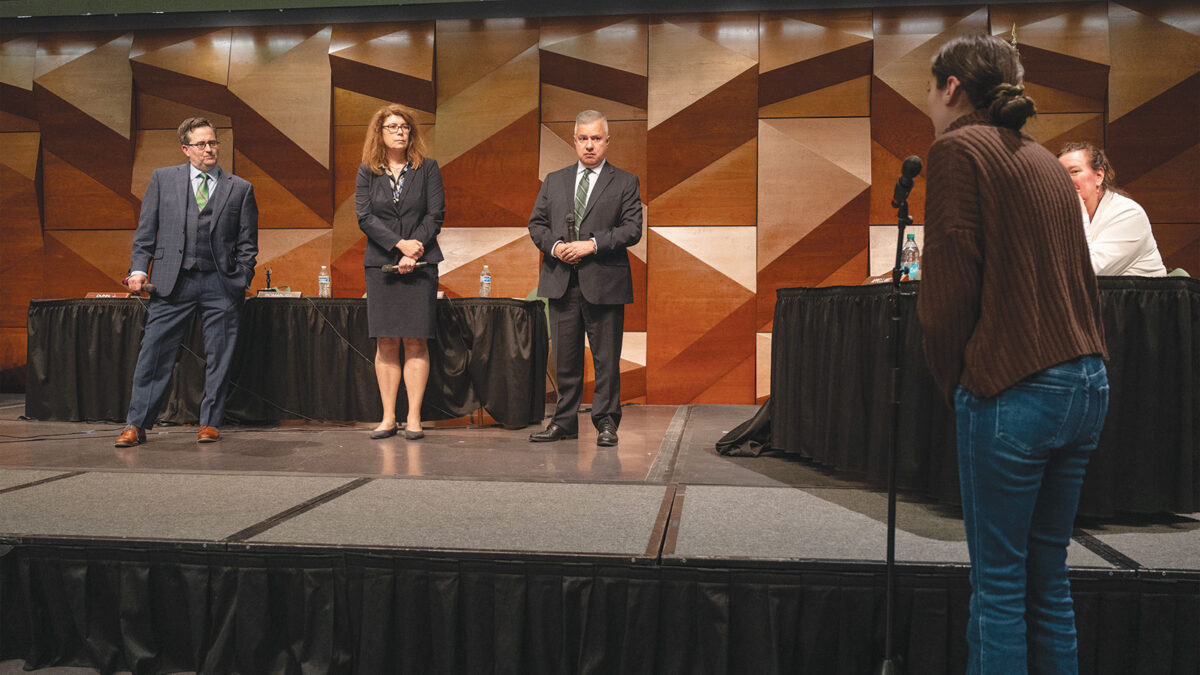
As an appellate judge, Judge Román continued his commitment to outreach and representation. He became one of the original “Dream Team” leaders, visiting colleges and universities to encourage diverse students to consider law school. As chief judge, he would regularly meet with diverse law student associations that visited the court. He also spoke with Latino high school students about pursuing their goals and resisting feelings of imposter syndrome or intimidation.
For Judge Román, this work connects back to the lessons he learned as a child while listening to his father discuss school bussing and inequality. Those early conversations helped shape his belief that the law can be a tool to promote fairness, increase opportunity, and instill public trust.
Striving for Diversity
Judge Román believes that public trust and confidence in the judiciary are strengthened when people can see themselves reflected in the institutions that serve them. For him, diversity on the bench matters not because judges should decide cases differently based on their backgrounds, but because life experiences shape perspective, understanding, and awareness.
At the same time, he emphasizes that diversity and excellence are not competing concepts. A diverse judiciary can bring broader life experiences to judicial decision-making while still maintaining the highest standards of legal excellence, fairness, and impartiality.
Judge Román has also seen the power of representation firsthand. During a presentation to Voces Latinas, a student leadership group at a high school with a majority-minority student population, he showed Latina students a photo of the 11 women then serving on the Colorado Court of Appeals. He explained that, for the first time in history, women made up half of the court, following the appointment of Judge Melissa Meirink.
He then asked the students, “Can you see someone on this court who looks like you?” Every hand went up. In that moment, the students could see themselves reflected in the judiciary, and Judge Román could see the impact that representation had on them. For him, that experience showed how judges can help inspire future generations and increase diversity on the bench.
Fairness, Equity, and the Role of the Courts
As an appellate judge, Judge Román had the opportunity not only to administer justice in individual cases, but also to help shape legal precedent through published opinions. For example, he authored a unanimous opinion rejecting an assertion of reasonable suspicion to search the backpack of a young Black man based on his presence in a “high-crime area.”
In that opinion, Judge Román explained that, while a high-crime area can provide one element of support for an investigatory stop, merely describing a location as “high crime” does not create reasonable suspicion of every young person of color in the neighborhood. Thus, unless carefully limited and factually based, citing an area as “high crime” can easily serve as a proxy for race or ethnicity. Through this opinion, he demonstrated how appellate courts can play an important role in protecting constitutional rights and promoting fair treatment within the justice system.
Encouraging Future Leaders
Judge Román encourages law students and lawyers, especially those from diverse backgrounds, not to let doubt or skepticism push them away from the profession. Earlier in his career, during the anti-affirmative action movement of the 1990s, he sensed that some people viewed him as an “affirmative action hire,” despite graduating from one of the top law schools in the country.
He recognizes that younger attorneys today may face similar doubts, assumptions, or skepticism. His advice is to stay with the profession and not to allow doubters to drive them away from work they love. He believes the legal profession needed diverse bar leaders and judicial officers then, and it continues to need them now.
Judge Román also strongly encourages younger attorneys to build relationships and find mentors. No matter where their careers lead—private practice, public service, the bench, or another path—the people they meet and the support they receive will shape both their professional growth and personal fulfillment. His own career reflects the importance of perseverance, community, and professional support.

Rewards and Challenges
One of the greatest honors of Judge Román’s career was serving as the first Hispanic chief judge of the Colorado Court of Appeals. However, he has made clear that he wants to be judged by the quality of the job he did in that role and nothing else. During his time as chief judge, the judges and staff of the court evaluated his leadership, and he was humbled by the extremely positive evaluation he received.
He has also been asked whether it mattered that he was a Hispanic chief judge. His answer is no, at least not in the way some people might assume. He cared equally about everyone at the court of appeals and made decisions based on what he believed was in the best interest of the court, just as every chief judge before him had done.
At the same time, he recognizes that a chief judge’s background can matter in the priorities they choose to emphasize outside the daily work of the court. For Judge Román, one of those priorities was beginning a new tradition of meeting annually with the leadership and membership of Colorado’s affinity bar associations. These meetings created opportunities to share information, strengthen relationships, and discuss concerns with the court. It was the first time that tradition had taken place, and it reflected his commitment to connection, communication, and trust.
Making a Difference
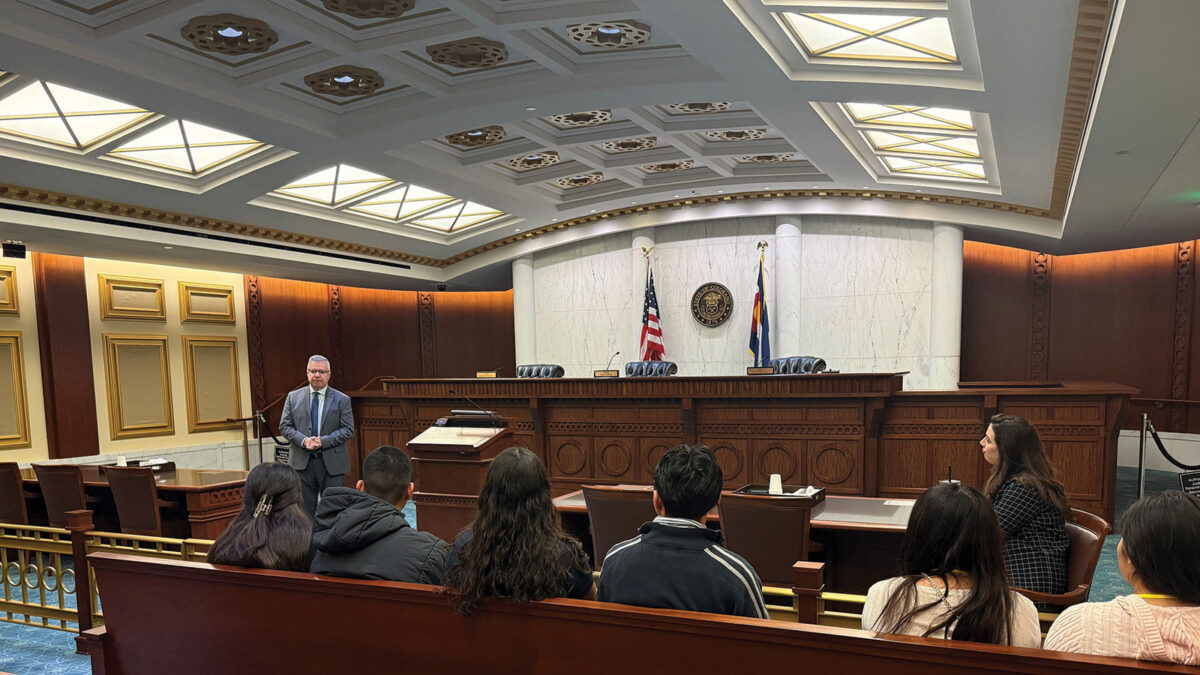
Judge Román has made a difference not only through his opinions and leadership, but also through the moments when he has inspired young people to imagine themselves in the legal profession. One powerful example occurred when he spoke at the Ralph L. Carr Colorado Judicial Center to diverse student leaders from Basalt High School.
During the visit, he asked whether any students could see themselves becoming a judge someday. One brave student raised his hand. Judge Román invited him to put on his judicial robe, which he had brought to chambers, and they took a picture together.
He then told the student, in front of the others, “I can absolutely see you wearing this robe someday, but you’re going to have to work very hard to get there. Do you understand?” The student nodded. As the students filed out of chambers, that same student stopped and told Judge Román that he had inspired him. Judge Román has shared that he will always remember how touched he felt in that moment.
Throughout his career, Judge Román has shown the importance of perseverance, representation, and service. From overcoming a speech impediment to becoming the first Hispanic chief judge of the Colorado Court of Appeals, his journey reflects both personal resilience and a deep commitment to the legal profession. His story reminds students, lawyers, and community members that the path to the bench is not always easy, but it is possible. It also shows that when judges share their stories, build relationships, and encourage others, they help create a stronger, more inclusive, and more trusted justice system.
Judge Román offers three pieces of advice to younger attorneys: there will be difficult periods in your career, so fight through them; try to spend time in the moment because it goes by faster than you think; and, most importantly, build relationships with other attorneys and find mentors. Connections matter enormously, whether the goal is partnership, public service, becoming a judge, or simply becoming the best lawyer you can be.
Explore This Issue

CBA’s 2026 Legislative Session in Review
Legislative Matters
By Tyler Mounsey