


Leonard E. Davies
July 2026
Download This Article (.pdf)
Leonard E. Davies
November 7, 1939–April 12, 2026
Celebrated civil rights attorney Leonard Emlyn Davies passed away at his home in Durango on April 12, 2026.
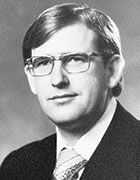 A graduate of the University of Denver Sturm College of Law, Davies built a thriving practice by demonstrating that he was a lawyer of uncommon range, conviction, and imagination. He belonged to a generation that did not merely argue for justice in the abstract, but pushed institutions to become more open, more visible, and more accountable.
He is perhaps best remembered for helping introduce cameras into the courtroom at a moment when the practice was still controversial. Colorado, along with Texas, was among the first states to allow cameras in courtrooms, an innovation pioneered in the landmark City and County of Denver v. Watson trial in which Davies served as defense attorney. The case was filmed in its entirety and broadcast nationally in 1970, changing how the public would see trials, the press, and the administration of justice. Today, 30 states now allow cameras in their courtrooms.
As with the Watson trail, Davies’s early legal work was grounded in civil rights and in service to people marginalized from the centers of power. He represented migrant farmworkers, the Black Panther Party, the Crusade for Justice, and beet harvesters around Greeley and Fort Lupton, building a reputation as a fearless advocate willing to take on difficult constitutional causes.
Davies later turned his attention to global food security and agricultural systems, focusing on the waste caused by inadequate grain storage in developing countries. That work reflected the same practical idealism that marked his earlier career: a refusal to accept needless suffering when structural change could help prevent it.
In later life, Davies became an accomplished writer and landscape painter as a manifestation of his lifelong love of the fine arts. His career showed that a lawyer’s vocation can be broader than the courtroom, and that justice, once pursued with conviction, can lead into many forms of human expression.
Davies leaves behind a legacy of courage, innovation, and moral seriousness. He helped make the legal system more transparent to the public, and he spent the rest of his life using his talents in the service of causes larger than himself. He is survived by his wife, Susan; his son Miles and daughter-in-law Martha; his daughter-in-law Mary; his grandchildren Olivia, Emlyn, Harrison, and Audrey; and his grandchild Caroline. He was predeceased in death by his son Tristan.
Donations in his memory may be made to the Durango Food Bank and the Durango Arts Center.
Explore This Issue

The American Dream and the Rule of Law
Rule of Law
By Russell Carparelli
